
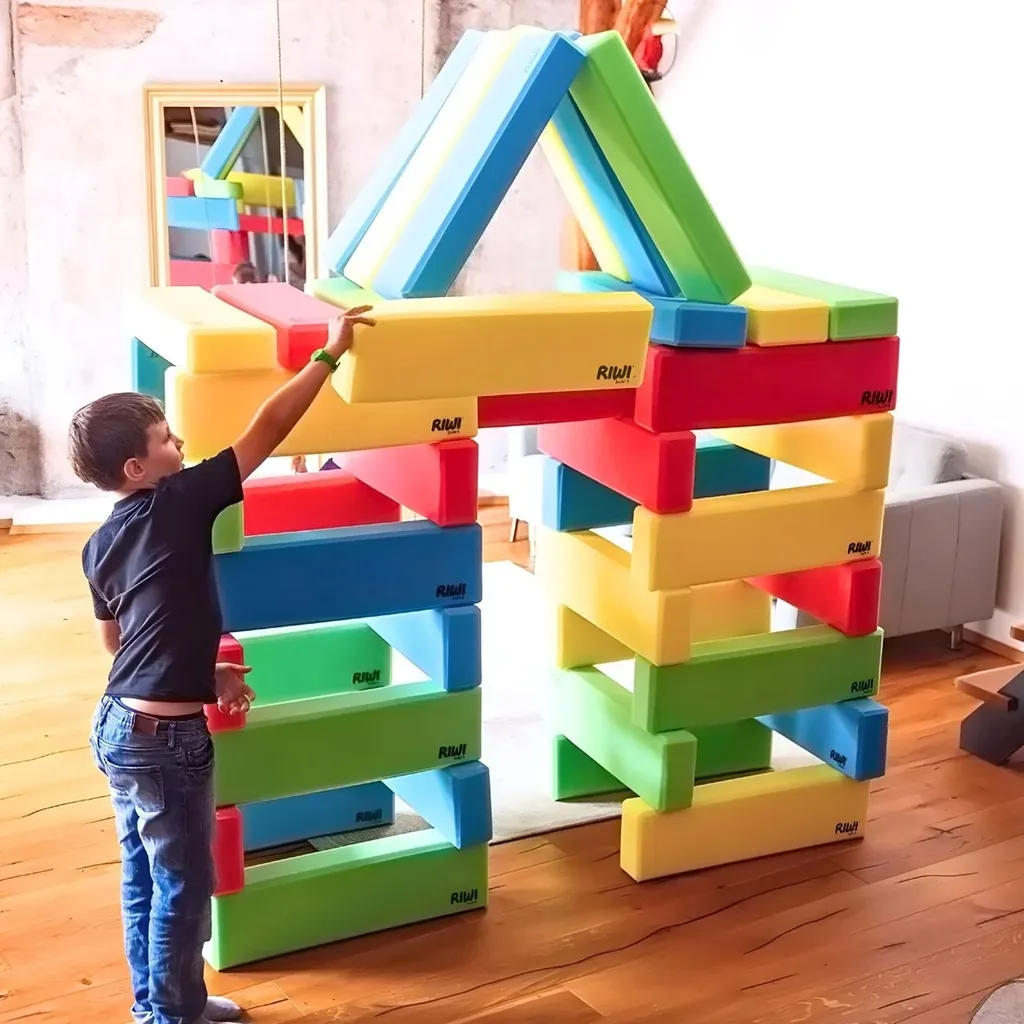
Giant Building Blocks offer children an exciting way to stay active, creative, and engaged while playing indoors or outdoors. Giant Building Blocks can turn an ordinary play area into a hands-on construction zone where children can build towers, walls, tunnels, houses, and imaginative play spaces. Because Giant Building Blocks encourage movement as well as creativity, they can support active play without relying on screens or complicated equipment. For families looking for versatile play materials, Giant Building Blocks provide opportunities for children to explore construction, coordination, problem-solving, and imaginative thinking in an enjoyable environment.
Why Safe and Active Play Matters
Children need opportunities to move their bodies, experiment with new ideas, and interact with their surroundings. Active play supports physical development while creative activities encourage children to think independently. A well-designed play environment can combine both benefits by giving children enough space to move while providing materials that inspire construction.
Building activities naturally encourage children to reach, carry, stack, arrange, and reposition pieces. This makes construction play more physically engaging than many stationary activities. At the same time, children have the freedom to determine what they want to create.
Encouraging Movement Through Construction
Traditional building activities can become more active when children work with larger pieces. Instead of sitting at a table, they may need to walk around the room to collect blocks, carry pieces to a construction site, and arrange materials into a larger structure.
Giant Building Blocks make this type of movement part of the play experience. Children can build a wall on one side of a room, move to another area to collect pieces, and return to continue their project. This combination of movement and creativity makes playtime more dynamic. For more information about large building blocks for kids, explore their features, benefits, age suitability, and role in encouraging imaginative and educational play.
Benefits of Giant Building Blocks for Children
Large construction pieces can offer a variety of developmental benefits. Children learn through experimentation, and building activities provide plenty of opportunities to test ideas.
Supporting Motor Skills
Picking up, carrying, positioning, stacking, and connecting construction pieces can help children practice coordination. Larger blocks can also encourage whole-body movement because children may need to use both hands and move their bodies while constructing.
Giant Building Blocks can therefore support gross motor development while also encouraging hand-eye coordination. Children learn to control their movements as they position pieces carefully to create stable structures.
Developing Problem-Solving Skills
Construction rarely works perfectly on the first attempt. A tower might fall, a wall may become unstable, or a bridge may need additional support. These challenges encourage children to think about possible solutions.
Giant Building Blocks create a simple environment for trial-and-error learning. Children can change the position of pieces, create wider foundations, lower the height of a structure, or experiment with different arrangements.
Creating a Safe Play Environment
Safety should always be considered when children are participating in active construction activities. A suitable play area should provide enough open space for children to move without accidentally hitting furniture or fragile objects.
Before play begins, parents and caregivers can remove unnecessary obstacles from the area. Construction should take place on a stable surface, and children should have enough room to move around their structures safely.
Choosing Age-Appropriate Materials
Building materials should always match the child's age and developmental abilities. Parents should check the manufacturer's recommended age range and follow all product-specific safety instructions.
Giant Building Blocks should be inspected regularly for damage. Cracked, broken, or damaged pieces should be removed from the play area. Choosing sturdy materials designed for children's use can also help support safe and long-lasting play.
Active Games With Building Blocks
Building materials can be used for much more than traditional stacking. Parents can introduce simple games that encourage movement while keeping children focused on creativity.
Build an Obstacle Course
Children can construct low walls, tunnels, pathways, or checkpoints and then move through their creation. The obstacle course can be changed regularly to keep the activity interesting.
Giant Building Blocks allow children to participate in designing the course as well as completing it. They can decide where each section should go and modify the layout after testing it.
Create a Rescue Mission
Pretend-play scenarios can turn construction into an active adventure. Children might build a rescue station, create a safe route, and pretend to help toy characters reach their destination.
This kind of role-play combines physical movement, storytelling, and construction. It also encourages children to cooperate when multiple players participate.
Indoor and Outdoor Building Activities
Construction play can be adapted to different environments. Indoors, children can use a playroom, bedroom, or open living space. Outdoors, they may have additional room to create larger designs.
Giant Building Blocks can provide flexibility for both settings when the specific product is designed and approved for the intended environment. Parents should always follow the manufacturer's instructions regarding indoor or outdoor use.
Indoor Play Ideas
Indoor construction can include houses, castles, shops, garages, animal shelters, and pretend classrooms. Children can add toy figures and household-safe props to develop stories around their creations.
The key is to maintain enough open space around the construction area. Children should be able to walk around their structures without tripping over scattered pieces.
Outdoor Construction Ideas
When suitable for outdoor use, large construction pieces can become part of backyard play. Children might create a pretend campsite, garden shop, animal enclosure, or adventure base.
Outdoor construction provides additional room for movement and can be combined with other age-appropriate physical activities.
Encouraging Cooperative Active Play
Building with siblings or friends can transform an individual activity into a collaborative project. Children learn to share pieces, communicate plans, divide responsibilities, and solve disagreements.
Giant Building Blocks are particularly useful for group projects because several children can work on different sections of a structure at the same time. One child might build a wall while another creates a tower or entrance.
Family Building Challenges
Parents can join the activity by suggesting challenges such as creating a strong bridge, building a house for stuffed animals, or designing a vehicle garage. These challenges should encourage creativity rather than create unnecessary pressure.
Working together also gives parents an opportunity to observe children's interests and problem-solving approaches.
Balancing Safety With Freedom
Children need freedom to explore, but they also need reasonable boundaries. Parents can establish simple rules before construction begins, such as keeping structures at a safe height, avoiding throwing pieces, and leaving pathways clear.
Giant Building Blocks can support independent play when children understand how to use them safely. Clear expectations allow children to experiment while reducing avoidable risks.
Teaching Children to Build Responsibly
Children can learn that safe construction starts with a stable foundation. Encourage them to build on level surfaces and avoid placing structures where they could block doors or create trip hazards.
After playtime, children can help dismantle larger structures and return pieces to their storage area. This teaches responsibility while keeping the play environment organized.
Keeping Active Play Interesting
Children often enjoy activities more when they have opportunities to make choices. Instead of providing the same building challenge every day, parents can introduce different themes.
One day could focus on building a city, while another could involve creating a castle or animal habitat. Giant Building Blocks can be rearranged into new designs each time, allowing children to approach familiar materials from different perspectives.
Parents can also encourage children to draw a simple plan before beginning a construction project. This adds another layer of planning and creative thinking to the activity.
Frequently Asked Questions
1. Are Giant Building Blocks suitable for active play?
Yes. Giant Building Blocks can encourage children to move, carry, stack, arrange, and construct. They can combine physical activity with creative and imaginative play when used in a suitable environment.
2. How can I make construction play safer?
Choose age-appropriate products, provide a clear play area, supervise children as appropriate, and follow the manufacturer's safety instructions. Keep construction away from stairs, fragile objects, heaters, and blocked pathways.
3. Can children use large building blocks outdoors?
Some products are designed for outdoor use, while others are intended only for indoor environments. Always check the manufacturer's instructions before taking construction materials outside.
4. What skills can children develop through building?
Building activities can support coordination, spatial awareness, planning, creativity, problem-solving, communication, and cooperation. Active construction can also encourage children to practice larger body movements.
5. How can parents encourage active building games?
Parents can introduce obstacle courses, rescue missions, pretend cities, building challenges, and themed construction projects. Allowing children to help design the activity can make them more engaged.
Conclusion
Safe and active play can be both educational and entertaining when children have the right materials and enough room to explore. Construction activities encourage movement, creativity, planning, and problem-solving, making them a versatile choice for playtime.
Giant Building Blocks give children the freedom to build structures that match their interests while incorporating physical movement into the experience. From obstacle courses and rescue stations to castles and pretend cities, children can continually discover new ways to use their construction materials.
With appropriate supervision, age-suitable products, clear play boundaries, and a well-organized environment, building activities can become an important part of active play. Giant Building Blocks can help transform everyday playtime into an opportunity for children to move, create, cooperate, and learn through hands-on exploration.